Can Cats Eat Spinach? A Leafy Dilemma for Pet Owners
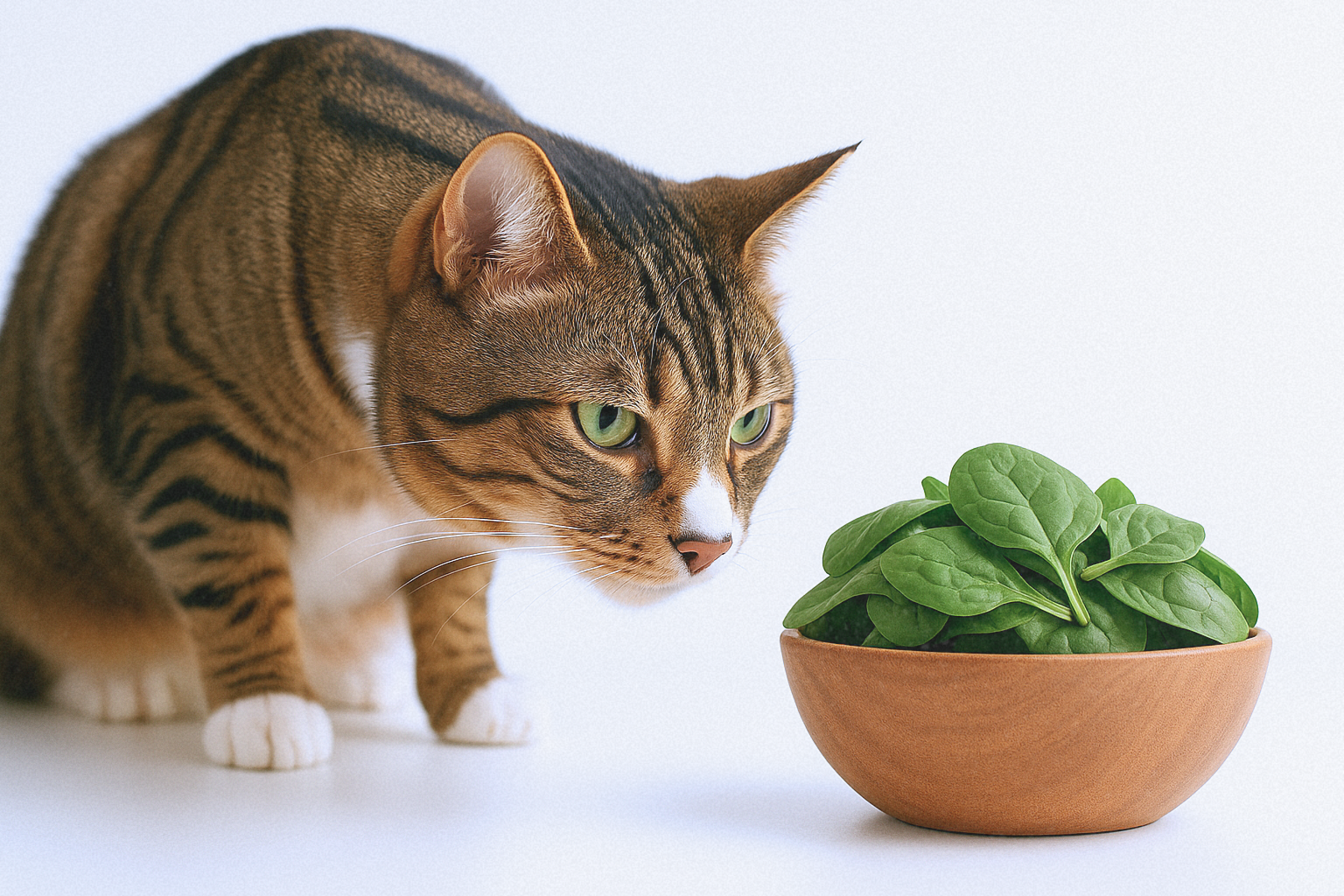
Spinach is packed with nutrients and often praised as a superfood for humans. But when it comes to cats, things aren’t quite so simple. Can cats eat spinach safely, or could it cause more harm than good?
Let’s unpack what every cat owner needs to know — straight from a veterinarian’s perspective.
What Is Spinach?
Spinach (Spinacia oleracea) is a leafy green vegetable commonly used in salads, smoothies, and cooked dishes. It’s rich in iron, vitamin K, folate, magnesium, and antioxidants. Humans love spinach for its health benefits, especially for bone health, immunity, and heart function.
It’s typically eaten raw or lightly cooked and has a mild, slightly earthy flavor. While it’s a staple in human diets, not all leafy greens are suitable for feline digestion — especially those high in oxalates or fiber.
Is Spinach Safe for Cats?
Spinach is conditionally safe for most cats, but there’s a major caveat.
Small amounts of spinach — particularly when it’s fresh, plain, and lightly cooked — are non-toxic to healthy adult cats. However, spinach contains calcium oxalate, a naturally occurring compound that can contribute to the formation of crystals or stones in the urinary tract.
Cats prone to urinary issues (like FLUTD or struvite crystals) should not eat spinach at all. For healthy cats, occasional nibbles likely won’t cause harm — but it should never become a regular part of their diet.
Are There Any Benefits of Spinach for Cats?
Yes, in small quantities, spinach may provide some nutritional perks:
- Fiber: Supports digestion and can help with mild constipation.
- Vitamins A, C, K: Promote immunity, blood clotting, and cellular health.
- Antioxidants: May support long-term cellular health and reduce oxidative stress.
However, cats are obligate carnivores — they don’t need vegetables for survival or optimal health. These benefits are minimal compared to what they get from a meat-based diet.
What Are the Risks of Spinach?
Here’s where things get more serious.
The primary risk with spinach is its oxalate content. Calcium oxalate can lead to or worsen kidney or bladder stones, particularly in cats with a history of urinary tract problems.
Other concerns include:
- Digestive upset: Especially if spinach is served raw, seasoned, or in large amounts.
- Pesticide residue: Conventionally grown spinach often carries pesticides. Always wash it thoroughly.
- Obstruction risk: Cooked spinach can become stringy and hard to chew, especially for kittens or older cats.
How to Serve Spinach to Cats (If Safe)
If your cat is healthy and your vet has no concerns about urinary issues, you can occasionally offer spinach in a tiny portion. Here’s how:
- Cook it lightly. Steam or boil spinach without oil, salt, garlic, or onions.
- Chop it finely. Make it easier to digest and prevent choking.
- Use it as a garnish. Sprinkle a small amount over their regular food.
- Watch their reaction. Some cats love leafy greens, others ignore them completely.
Never serve creamed spinach or recipes containing seasonings, butter, or dairy.
Can Kittens Eat Spinach?
It’s not recommended to give spinach to kittens.
Their digestive systems are still developing, and they are particularly vulnerable to oxalate-related issues. Stick with high-quality kitten food approved by your veterinarian. Leafy greens can wait until adulthood — if ever.
Safer Alternatives to Spinach for Cats
If you’re looking to give your cat a green treat, consider these safer options:
- Pumpkin (plain, cooked): Great for digestion and hairball control.
- Zucchini (cooked): Mild, hydrating, and safe in small bites.
- Green beans (steamed): Low in calories and safe for most cats.
- Peas: Offer fiber and protein, and are often found in commercial cat foods.
These veggies have lower oxalate content and are generally better tolerated by cats.
Vet’s Final Verdict
Spinach is not inherently toxic to cats, but it carries real risks — especially for cats with urinary sensitivities. For healthy cats, a few nibbles now and then likely won’t cause harm, but it’s far from necessary.
When in doubt, skip the spinach. Your cat’s nutritional needs are best met through a balanced, meat-based diet. And if your cat has ever had urinary issues, avoid spinach completely unless your vet says otherwise.