Can Cats Eat Lettuce? A Vet’s Guide to This Leafy Green
Can Cats Eat Lettuce? Lettuce might be a staple in your salad, but should it end up in your cat’s bowl too? While it’s common for cats to nibble on leafy greens out of curiosity, not all plants are created equal when it comes to feline digestion. As a veterinarian, I often hear this question from cat owners who want to make their pet’s diet healthier or more exciting. So, let’s explore if lettuce is safe, beneficial, or best left on your plate.
What Is Lettuce?
Lettuce is a leafy vegetable commonly used in salads, sandwiches, and wraps. It belongs to the Lactuca sativa species and comes in several varieties, including romaine, iceberg, butterhead, and leaf lettuce. While low in calories and rich in water, lettuce is often valued more for its texture than nutritional content. It contains small amounts of vitamins A and K, along with folate and fiber.
Is Lettuce Safe for Cats?
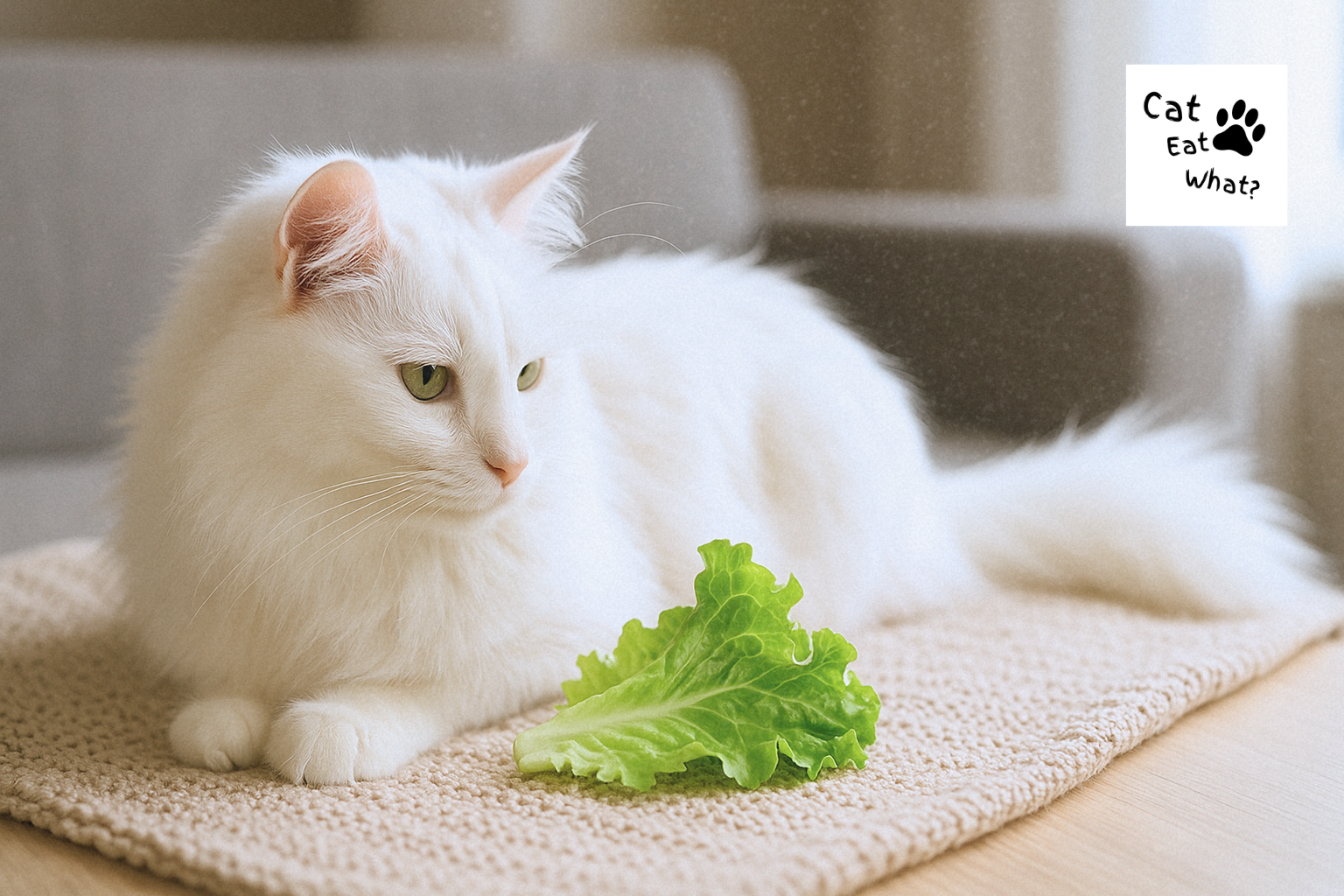
Yes, lettuce is non-toxic and safe for cats in small amounts. The ASPCA confirms that lettuce is not poisonous to felines. That said, just because it’s safe doesn’t mean it should be a regular part of their diet. Cats are obligate carnivores, which means their bodies are designed to process meat — not greens.
Feeding lettuce occasionally as a treat is fine, especially if your cat shows interest. It may even help with hydration due to its high water content. However, it should never replace meat-based nutrition.
Are There Any Benefits of Lettuce for Cats?
Lettuce doesn’t offer any significant health benefits to cats, but there are a few minor positives:
- Hydration Boost: Lettuce is about 95% water, so a small nibble can help increase moisture intake.
- Low-Calorie Treat: It can be a safe, non-fattening alternative to commercial treats.
- Fiber: The trace amounts of fiber may help with mild digestion stimulation, though this isn’t usually needed in a healthy feline diet.
- Enrichment: Some cats enjoy the texture and movement of leafy greens, making lettuce a fun sensory treat.
Keep expectations realistic, though — lettuce is not a superfood for cats.
Risks of Lettuce for Cats
While lettuce is generally harmless, a few risks are worth noting:
- Digestive Upset: Too much lettuce may cause loose stools or mild vomiting due to its fibrous nature.
- Choking Hazard: Large pieces of lettuce can be difficult for cats to chew and may present a choking risk.
- Pesticides or Contamination: Unwashed or poorly stored lettuce could carry pesticide residues or bacteria like E. coli.
- Nutritional Void: Relying on lettuce as a treat too often may lead to nutritional imbalances if it replaces more appropriate foods.
As with all human foods, moderation is key.
How to Feed Lettuce to Cats (If You Want To)
If your cat seems interested in lettuce, here’s how to do it safely:
- Wash thoroughly to remove any pesticides or contaminants.
- Use plain, fresh leaves — no salad dressings, oils, salt, or toppings.
- Chop into small pieces to reduce the choking risk.
- Serve raw — cooked lettuce becomes mushy and loses its crunchy appeal.
- Offer sparingly — a few pieces once in a while is enough.
Stick to organic varieties when possible, and avoid serving old or wilted lettuce.
Can Kittens Eat Lettuce?
Kittens should not be fed lettuce intentionally. Their developing digestive systems are more sensitive, and they require nutrient-dense diets to support growth. While a curious nibble likely won’t harm them, lettuce offers no value to a kitten’s nutritional needs.
Stick to kitten-formulated food and vet-approved treats during their first year.
Healthier Alternatives to Lettuce
If you’re looking for cat-safe veggies that might offer more benefit or enrichment, try:
- Cooked pumpkin – Great for digestion in small amounts.
- Steamed zucchini – Soft and easy to digest.
- Peas – Found in many cat foods; rich in vitamins and protein.
- Cat grass (wheatgrass) – Specifically grown for feline curiosity and hairball relief.
These options are more appropriate than plain lettuce if you want to explore plant-based additions to your cat’s routine.
Dr. Fox’s Final Verdict
Lettuce is safe for cats, but not necessary. It offers hydration and a bit of crunch, but little else in the way of nutrition. If your cat enjoys it and tolerates it well, there’s no harm in the occasional nibble. Just be sure it’s clean, fresh, and cut into small pieces.
When in doubt, focus on a meat-based diet and consult your vet before adding anything new to your cat’s bowl.