Can Cats Eat Celery? A Crunchy Treat or a Risky Snack?
Celery is a staple in many kitchens, loved for its crunch and low-calorie appeal. But can cats eat celery safely? If your feline has shown interest in that crisp green stalk on your plate, you might be wondering whether it’s okay to share a piece. Let’s explore the facts, risks, and smart ways to feed celery—if at all.
What Is Celery?
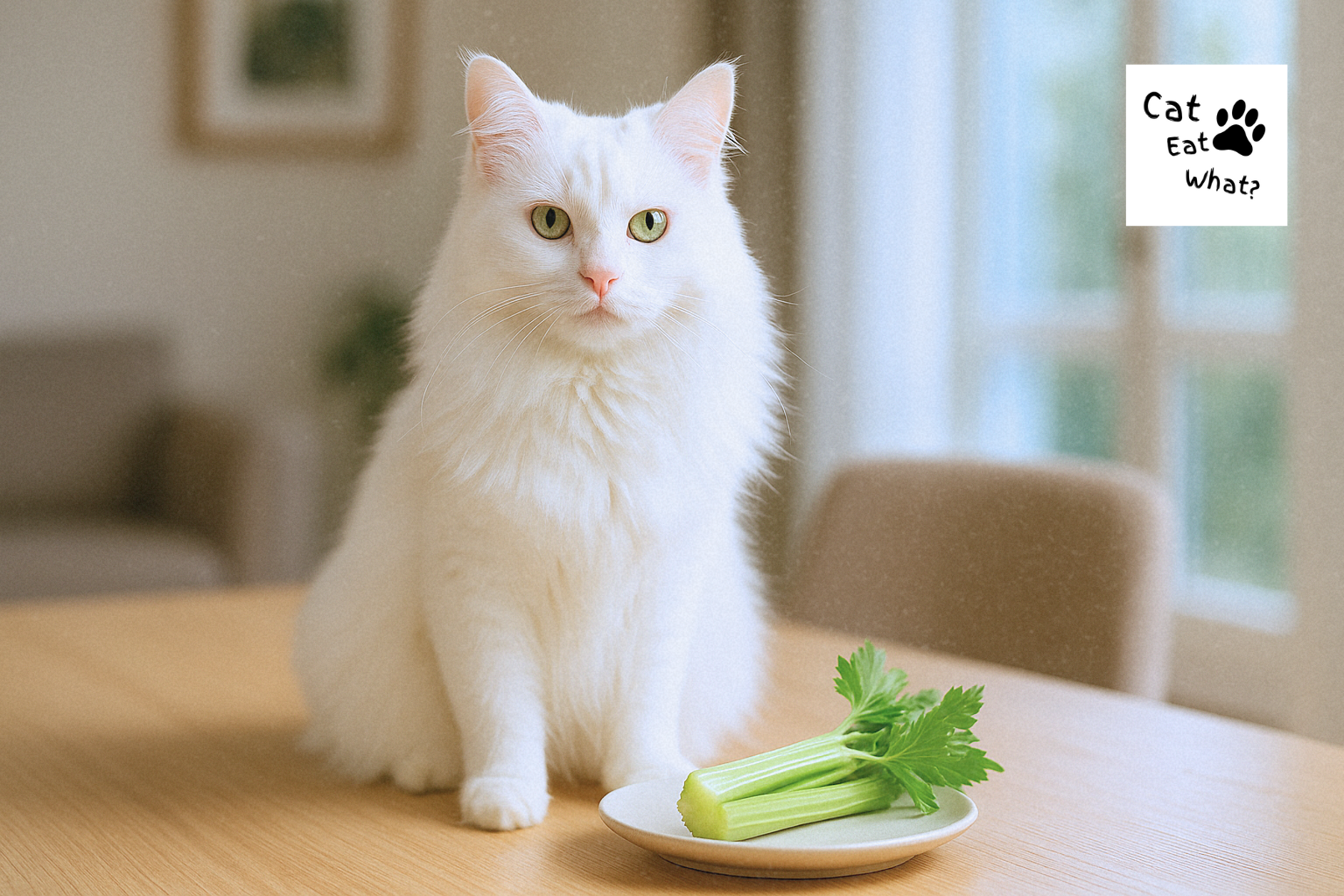
Celery is a fibrous, water-rich vegetable belonging to the Apiaceae family, known for its long, pale green stalks and leafy tops. It’s often used in soups, stews, salads, or eaten raw for its refreshing crunch. While low in calories and rich in fiber and vitamins like K and C, celery is primarily a human health food—so when it comes to cats, we need to look beyond the nutritional label and examine how their bodies handle it.
Is Celery Safe for Cats?
Yes, celery is generally safe for cats in small, occasional amounts. It is not toxic, and both the stalk and leafy top can be consumed by cats without causing immediate harm. However, “safe” doesn’t mean beneficial—or necessary—for feline diets.
Cats are obligate carnivores, meaning their digestive systems are built for meat. While a nibble of celery won’t hurt, it doesn’t provide anything your cat can’t already get from a well-balanced carnivorous diet.
Are There Any Benefits of Celery for Cats?
In theory, celery offers hydration thanks to its high water content (about 95%), and a small amount of fiber that might help digestion in rare cases. Some cats even enjoy playing with celery leaves due to their texture and scent, making it a form of natural enrichment.
Anecdotally, celery has a scent somewhat similar to catnip for some cats. While it’s not a consistent reaction across all felines, it may trigger excitement or curiosity in a similar way.
But from a veterinary nutrition standpoint, celery is not a necessary or especially beneficial food for cats. It’s fine as a snack, but not something to add to their regular diet.
What Are the Risks of Celery for Cats?
Celery poses a few risks if given improperly or in excess:
- Choking Hazard: The fibrous nature of celery can be stringy and hard to chew, especially for cats that tend to swallow quickly. Always cut it into tiny, manageable pieces.
- Digestive Upset: Too much celery can lead to vomiting, diarrhea, or gas. Cats lack the digestive enzymes to efficiently break down plant fiber.
- Pesticide Residue: Celery ranks high on the “Dirty Dozen” list due to pesticide retention. If not washed thoroughly, it can expose your cat to harmful chemicals.
- Sodium Risk (if seasoned): Never offer celery that has been salted, cooked in broth, or prepared with garlic or onions—these can be toxic to cats.
How to Serve Celery to Your Cat (If You Want To)
If your cat seems curious and you’d like to offer a small taste, follow these safe steps:
- Wash thoroughly to remove any pesticides or dirt.
- Remove strings from the stalk, especially if it’s from the outer layer.
- Chop finely—bite-sized pieces reduce choking risk.
- Serve raw and plain—no salt, oil, seasoning, or dips.
- Offer sparingly, as an occasional treat—not daily.
Start with just a few tiny pieces and observe for any signs of gastrointestinal upset afterward.
Can Kittens Eat Celery?
It’s best to avoid giving celery to kittens. Their digestive systems are more sensitive, and they require a high-protein, carefully balanced diet for growth. Even a small piece of celery can cause unnecessary strain or upset. Stick to kitten-formulated foods and vet-approved treats until your cat reaches adulthood.
Healthier Treat Alternatives for Cats
If you’re looking for better snack options, consider these feline-friendly alternatives:
- Cooked plain chicken — lean protein and highly digestible
- Freeze-dried salmon or tuna treats — minimal processing, rich in omega-3s
- Pumpkin (plain and pureed) — helps with digestion and hairballs
- Catnip or silvervine — for playful enrichment without calories
These are more aligned with your cat’s natural diet and offer actual nutritional value.
Vet’s Final Verdict: Can Cats Eat Celery?
Yes, cats can eat celery—but they don’t need to. A few small, raw pieces now and then are unlikely to cause harm, but celery isn’t a necessary or meaningful addition to your cat’s diet. Watch for stringiness and avoid overfeeding. When in doubt, stick to vet-approved treats that are specifically formulated for feline health.