Can Cats Eat Whipped Cream? Sweet Fun or Stomach Trouble?
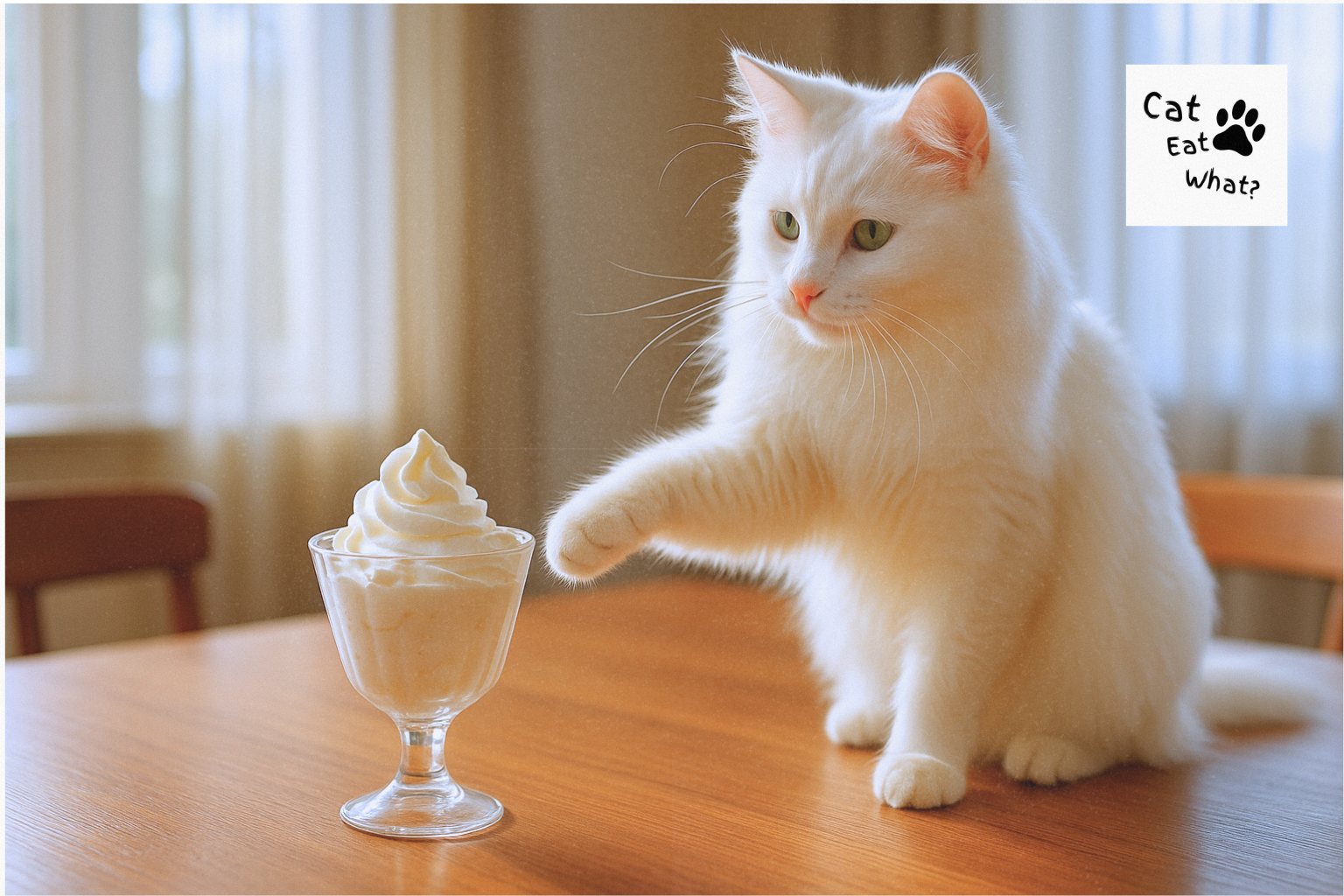
Whipped cream is light, fluffy, and irresistibly sweet—a topping that turns coffee, pies, and desserts into something extra special. Many cats seem fascinated by its airy texture and may even try to swipe a lick from your plate. But the big question is: Can cats eat whipped cream safely?
As a veterinarian-led resource, I’ll walk you through what whipped cream actually is, why it might tempt your cat, the potential benefits and risks, and what to do if your cat sneaks some. You’ll also find safer, cat-friendly alternatives.
What Is Whipped Cream?
Whipped cream is made by beating heavy cream until it becomes light and airy. Sugar, vanilla, or other flavorings are often added for sweetness. Commercial canned whipped cream may also contain stabilizers (to keep it fluffy) and propellants like nitrous oxide to push it from the can.
While whipped cream may seem harmless because it’s so light, it’s actually high in fat, sugar, and dairy—three things cats don’t process as well as humans.
Is Whipped Cream Safe for Cats?
The short answer: Not recommended.
A small lick of whipped cream is unlikely to poison your cat, but it’s far from a healthy treat. There are several reasons:
- Lactose intolerance – Most adult cats cannot properly digest lactose in dairy products.
- High sugar content – Sugar offers no nutritional value to cats and can cause weight gain.
- High fat – Heavy cream is loaded with saturated fat, which can be hard on a cat’s digestive system.
- Additives – Some commercial whipped creams contain sweeteners or flavorings that can be harmful.
Any Benefits for Cats?
From a nutritional perspective, whipped cream offers no meaningful benefits to cats.
- Calories – Cats may enjoy the taste, but the calories come mostly from fat and sugar.
- Novel texture – The airy fluffiness may be a fun sensory experience, but it doesn’t provide any health advantages.
- Moisture – Whipped cream contains some water, but not enough to count as a hydrating treat.
Cats get all their essential nutrients from a balanced, meat-based diet. Whipped cream simply doesn’t contribute to their nutritional needs.
Risks Involved
Even a seemingly small portion of whipped cream can cause problems for cats, especially if given regularly.
1. Digestive Upset
Cats lacking lactase (the enzyme needed to digest milk sugar) may experience:
- Diarrhea
- Gas
- Bloating
- Vomiting
2. Obesity
Whipped cream is calorie-dense for its volume. Just a tablespoon can add unnecessary fat and sugar to a cat’s diet.
3. Pancreatitis
Very fatty foods may trigger inflammation of the pancreas in some cats, leading to abdominal pain, lethargy, and decreased appetite.
4. Additive Sensitivities
Some canned whipped creams contain artificial flavors or sweeteners like xylitol, which is toxic to cats (although rare in whipped cream, it’s a serious risk if present).
5. Nutritional Imbalance
Feeding treats like whipped cream in place of complete cat food can cause dietary imbalances over time.
Best Way to Offer It (If You Must)
If you’re determined to let your cat try whipped cream:
- Choose plain, unsweetened whipped cream made from heavy cream only.
- Offer no more than a pea-sized amount—literally a quick taste.
- Treat it as an occasional indulgence—once every few months, not weekly.
- Avoid any whipped cream with added sweeteners, chocolate, or flavor syrups.
- Watch for any signs of digestive upset afterward.
Can Kittens Eat Whipped Cream?
No.
Even though kittens produce more lactase than adult cats, whipped cream’s fat and sugar content still make it inappropriate for their growing bodies. They need precise nutrition from a complete kitten diet—not calorie-dense dairy treats.
Safer Alternatives
If your cat enjoys creamy textures or licking treats from a spoon, try these safer options:
- Lactose-free cat milk – Specially formulated for feline digestion.
- Churu or other cat purée treats – Soft, creamy, and nutritionally safe for cats.
- Plain Greek yogurt (unsweetened, lactose-free) – Small amounts can be easier to digest than whipped cream.
- Goat’s milk for cats – Naturally lower in lactose and gentler on digestion.
Vet’s Final Verdict
Whipped cream might look harmless, but for cats, it’s a high-fat, high-sugar dairy product that offers no health benefits and several risks. While a tiny lick now and then won’t harm most healthy adult cats, it’s not something to make a regular part of their diet.
Instead, stick to cat-friendly creamy treats that are formulated for their digestive needs. Your cat will be just as happy—and much healthier.