Can Cats Eat Raspberries? What You Should Know Before Sharing This Berry
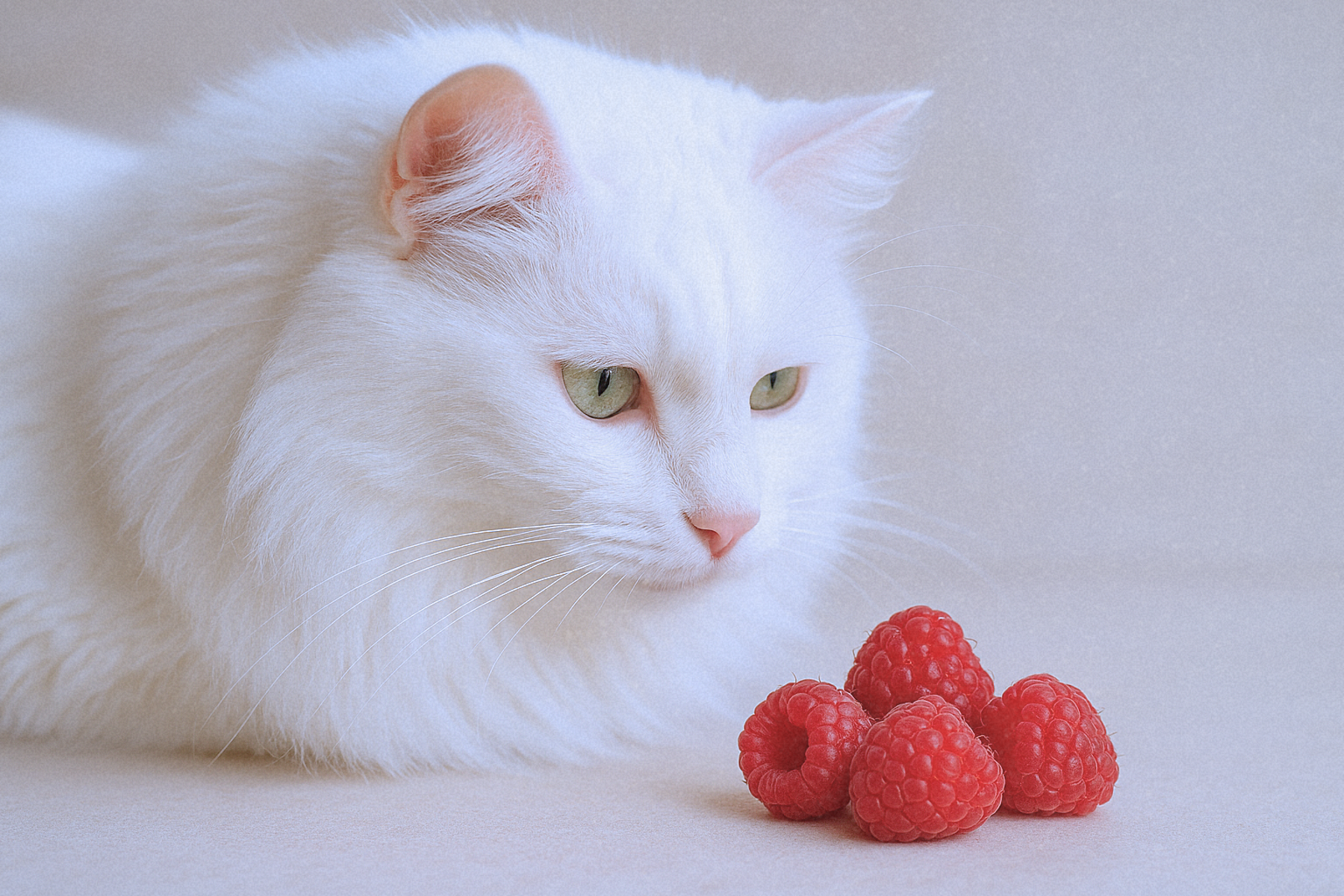
Raspberries are sweet, tart, and packed with nutrients — a go-to snack for many people during berry season. But if your cat gets curious and tries to lick a berry off your plate, should you let them? As a veterinarian, I’ve had plenty of clients ask whether fruits like raspberries are safe for cats. The answer is a bit more nuanced than a simple yes or no.
Let’s break it down — what raspberries are, whether they’re safe for cats, and how to handle the risks.
What Are Raspberries?
Raspberries are small, red or golden-colored berries from the rose family (Rosaceae). Known for their rich flavor and slightly fuzzy texture, they’re loaded with fiber, vitamin C, and antioxidants. While most often eaten fresh, raspberries are also used in jams, desserts, and smoothies.
They’re a powerhouse food for humans — but cats are obligate carnivores, and their biology treats fruit very differently.
Is It Safe for Cats?
The good news: yes, raspberries are non-toxic to cats when served properly and in very small amounts.
Raspberries are not listed as poisonous by the ASPCA, and most healthy adult cats can tolerate a tiny piece now and then. However, they’re not a necessary or beneficial part of a cat’s diet — and feeding them too often can do more harm than good.
In other words: safe in moderation, but not something your cat needs.
Any Benefits for Cats?
While raspberries aren’t essential for cats, there are a few mild upsides if offered occasionally:
- Antioxidants: Raspberries are rich in compounds that may support overall cell health.
- Fiber: A small amount could aid digestion or stool consistency.
- Hydration: Raspberries contain about 85% water, which can slightly support hydration.
Still, the nutritional benefits are geared toward omnivores and herbivores — not carnivores. Your cat’s digestive system simply isn’t built to extract value from plant matter.
Risks Involved
Despite their non-toxic status, raspberries come with a few potential concerns for cats:
1. Xylitol (natural trace)
Raspberries naturally contain small amounts of xylitol, a sugar alcohol that is extremely toxic to dogs. In cats, the risk is less defined, but large amounts could be dangerous. Even though the quantity in a few berries is low, this reinforces the need for strict moderation.
2. Sugar Content
Raspberries contain fructose and glucose — sugars that cats don’t metabolize well. Too much can lead to stomach upset, gas, or diarrhea.
3. Choking Hazard
Raspberries are soft but can still pose a choking risk, especially if your cat gulps without chewing.
4. Allergic Reaction
Cats can be allergic or sensitive to almost anything. Always monitor closely after offering a new food.
How to Feed
If your cat seems interested in raspberries, here’s how to do it safely:
- Offer no more than one raspberry at a time
- Rinse thoroughly to remove any pesticides
- Serve fresh, never frozen in chunks or covered in syrup
- Watch your cat chew — avoid gulping or play-biting
- Do not feed daily — once a week is more than enough
Tip: You can mash a small piece and offer it on your finger or plate for a controlled taste.
Can Kittens Eat Raspberries?
Kittens should not eat raspberries.
Their digestive systems are too sensitive, and introducing sugar, fiber, or potential irritants early in life can lead to vomiting, diarrhea, or long-term aversions. Stick to a complete kitten formula until your vet recommends enrichment foods.
Safer Alternatives
If you’re looking for healthy ways to enrich your cat’s diet or satisfy curiosity, try these instead:
- Plain cooked pumpkin – Great for digestion and safe
- Blueberries – Lower sugar and easier to portion
- Cantaloupe – Many cats enjoy the smell and texture
- Cooked zucchini – Soft, neutral, and safe for most cats
Always start with a tiny portion and supervise their reaction.
Vet’s Final Verdict
Can cats eat raspberries? Yes — but only a tiny bit, and not often.
Raspberries are non-toxic and may offer mild enrichment, but they’re not designed for feline nutrition. The risks — especially from sugar and trace xylitol — outweigh any minor benefits if given in excess.
If your cat steals a berry, there’s no need to panic. Just don’t make it a habit, and keep their treats focused on what their bodies are built for: meat.
Reference:
Can cats eat cherries? – ASPCA