Can Cats Eat Peas? A Tiny Green Snack With Big Questions
Cats and vegetables aren’t usually a natural pairing — but what about peas, can cats eat peas? These little green spheres often sneak into our meals, and curious cats might paw at or nibble on one. But are peas safe for cats to eat? And if so, do they offer any real nutritional benefit — or just confusion in a bowl? Let’s explore.
What Are Peas?
Peas are small green legumes harvested from the pods of the Pisum sativum plant. Most commonly, we eat green garden peas (also called sweet peas), but snow peas and snap peas are also popular. They’re rich in fiber, plant-based protein, and essential vitamins like A, C, and K. In the human diet, peas are a staple in everything from stews and fried rice to frozen veggie mixes. They’re naturally sweet, soft when cooked, and easy to serve — which sometimes lands them near your cat’s food bowl.
Can Cats Eat Peas?
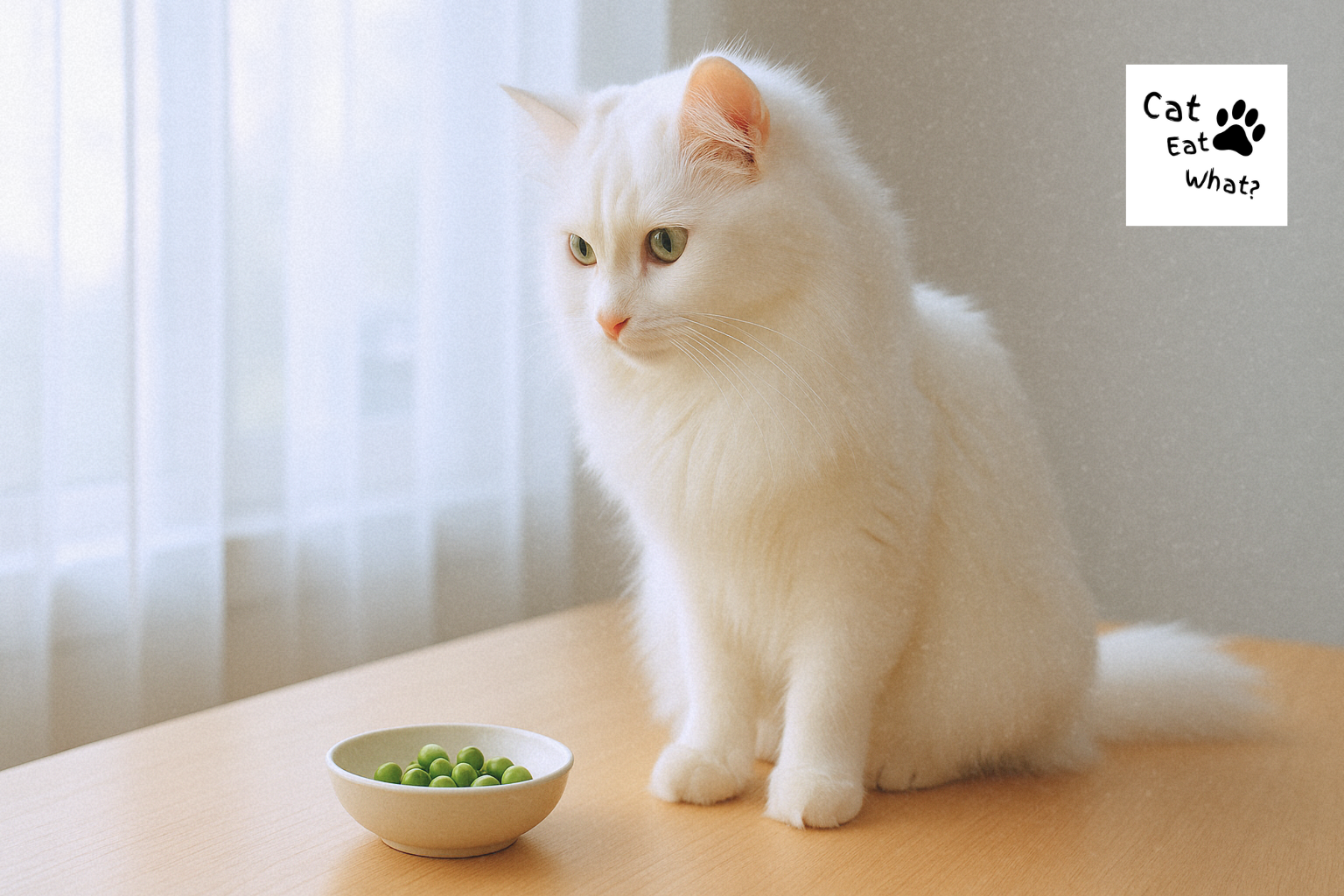
Yes — cats can safely eat peas in moderation. Green peas are non-toxic to cats and are even found as an ingredient in many commercial cat foods. That’s because peas are low in fat, rich in fiber, and provide some valuable plant-based nutrients. But while they’re safe, they’re not essential — cats are obligate carnivores and don’t need vegetables to thrive.
Are Peas Good for Cats?
In small amounts, peas can offer minor benefits:
- Fiber boost: A few peas can help support healthy digestion.
- Low-calorie treat: Peas are a much healthier snack than processed cat treats.
- Micronutrients: Peas contain B vitamins, potassium, and antioxidants, which can support general well-being.
However, it’s important to note: cats absorb nutrients from meat much more efficiently than from plants. So while peas are “good” in the sense that they aren’t harmful, their nutritional value is supplementary at best.
Risks of Feeding Peas to Cats
While peas are generally safe, there are a few precautions to keep in mind:
- Choking hazard: Whole peas, especially when hard or raw, can pose a risk to kittens or small cats.
- Seasonings: Never feed peas prepared with garlic, onions, salt, or butter — all of which can be harmful.
- Digestive upset: Too many peas can lead to gas or diarrhea due to their fiber content.
- Legume allergies: Rarely, cats may show sensitivity or mild allergies to legumes like peas.
Moderation and preparation are key to keeping peas harmless in your cat’s diet.
How to Feed Peas to Your Cat
If you’d like to offer peas as a treat, here’s how to do it safely:
- Choose plain peas only — fresh, frozen, or canned without salt.
- Cook or steam lightly to soften them, especially for kittens or senior cats.
- Avoid pods — especially fibrous ones like snow pea shells.
- Serve one at a time or mash a few peas into their wet food.
Start with just a few peas and observe your cat’s reaction. If they like the taste and digest them well, you can offer peas occasionally as a healthy snack.
Can Kittens Eat Peas?
Kittens can eat peas, but only in very small, soft portions. Their digestive systems are still developing, and the risk of choking is higher. If introducing peas to a kitten, mash them completely and mix into their regular food. As always, consult your veterinarian before offering any new foods to growing kittens — their nutritional needs are far more specific than adult cats.
Safer & Healthier Alternatives to Peas
If you’re looking for safe and healthy treats for your cat, consider:
- Cooked pumpkin (plain): A fiber-rich option great for digestion.
- Steamed carrots: Naturally sweet and safe in small bites.
- Freeze-dried meat treats: A protein-rich, species-appropriate snack.
- Commercial grain-free cat treats: Choose vet-approved brands without fillers.
These alternatives either offer more species-appropriate nutrition or easier digestibility than peas.
Dr. Fox’s Final Verdict
Peas are perfectly safe for cats to eat — and may even offer minor health benefits. They’re a great occasional treat when plain, soft, and served in moderation. But don’t let their sweetness fool you: peas are no substitute for a meat-based diet. Cats simply weren’t built to thrive on vegetables. That said, if your cat enjoys the occasional green snack, a few peas now and then are nothing to worry about.