Can Cats Eat Pears? What Every Cat Owner Should Know Before Sharing a Slice
Pears are a juicy, refreshing fruit that many people enjoy — especially in the warmer months. But what happens when your curious cat leans in for a sniff or a bite? As a veterinarian, I’m often asked whether cats can eat fruits like pears. In this article, I’ll walk you through the safety, risks, and practical advice for cats and pears — all from a feline health perspective.
What Are Pears?
Pears are sweet, soft-fleshed fruits that grow on deciduous trees and belong to the Rosaceae family — the same as apples, cherries, and peaches. With their signature teardrop shape and crisp or buttery texture (depending on variety), pears are packed with fiber, vitamin C, and natural sugars. Humans often eat them raw, poached, or sliced into desserts and salads.
But while pears are a healthy treat for us, cats process food differently — so it’s worth asking whether this fruit fits into a feline diet at all.
Is It Safe for Cats?
The short answer: yes, ripe pear flesh is safe for cats in small amounts.
According to the ASPCA, pears are not toxic to cats, which means a few bites won’t pose a danger — as long as the core and seeds are removed. The flesh itself is generally non-irritating and unlikely to cause allergic reactions.
However, “safe” does not mean necessary or particularly beneficial. Cats are obligate carnivores. Their digestive systems are built to extract nutrients from animal-based proteins, not fruit. That’s why pears — while harmless in moderation — should be treated as a rare treat, not a dietary staple.
Any Benefits for Cats?
There are a few mild upsides to offering a sliver of pear occasionally:
- Fiber: Pears contain both soluble and insoluble fiber, which can support digestion. A small amount might help a constipated cat.
- Hydration: Pears are about 84% water, which can slightly boost fluid intake for cats who don’t drink enough.
- Enrichment: Some cats enjoy exploring new textures and flavors. A tiny piece of pear can be a low-risk novelty.
Still, these benefits are minimal and not essential. Your cat gets all the fiber and nutrients they need from a complete, meat-based cat food.
Risks Involved
While pear flesh is safe, there are a few things you must avoid:
1. Pear Seeds and Core
Pear seeds contain amygdalin, which can release cyanide when metabolized. While a single seed may not cause toxicity, the core should always be removed. Do not let your cat chew on seeds or stems.
2. Too Much Sugar
Pears are naturally high in fructose. Cats don’t need sugar, and too much can upset their stomach or contribute to weight gain. Even a little can trigger vomiting or diarrhea in sensitive cats.
3. Choking Hazard
Unripe pears or large chunks can pose a choking risk. Always cut into small, soft pieces if offering any at all.
How to Feed (If Safe)
If you’d like to let your cat try a small taste of pear:
- Choose a ripe, soft pear
- Wash the fruit thoroughly
- Remove seeds, stem, and core
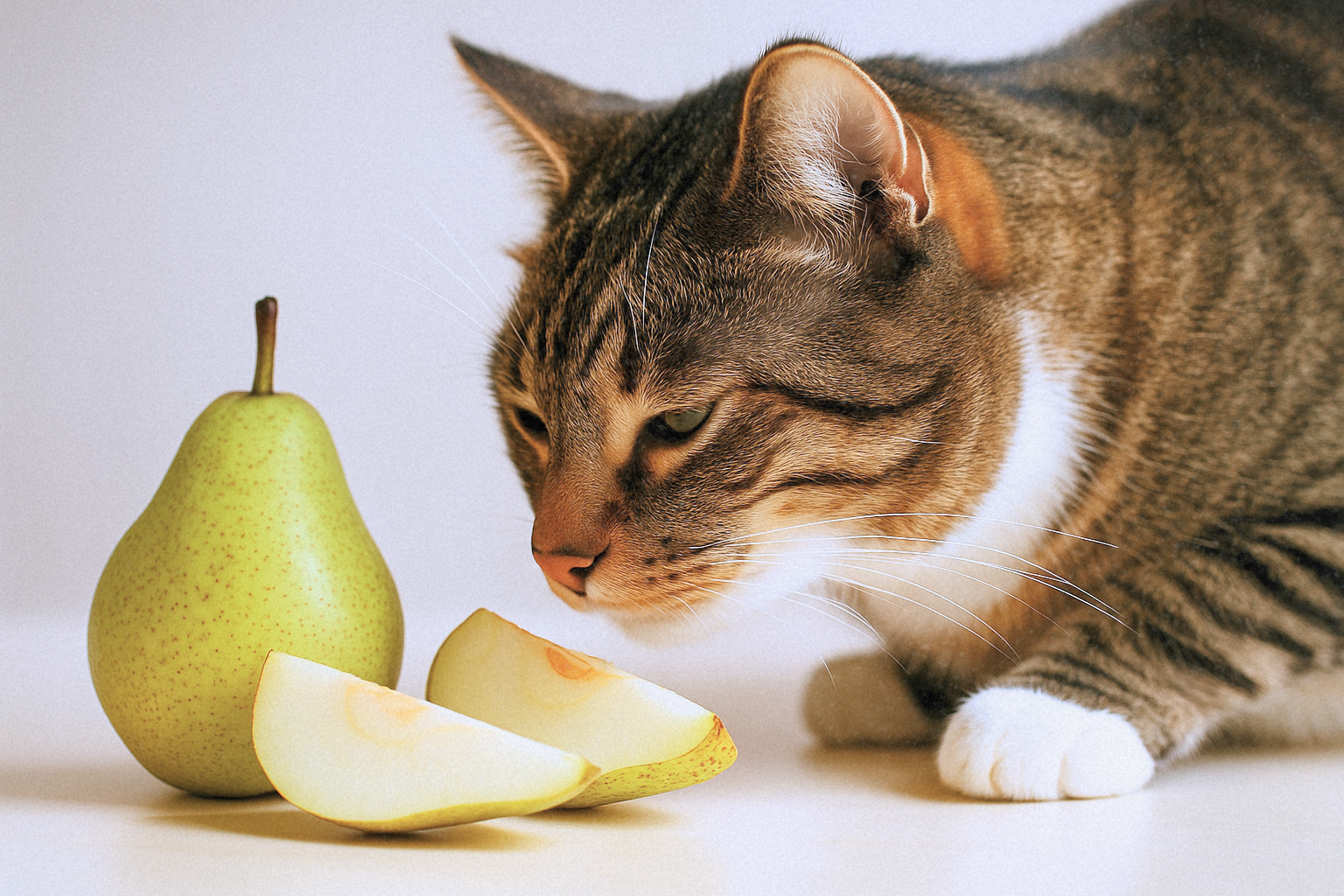
- Cut a small sliver — no larger than a fingernail
- Offer it by hand or place on a clean plate
- Watch for signs of discomfort or disinterest
If your cat walks away, don’t push it — many cats simply aren’t interested in sweet flavors.
Can Kittens Eat Pears?
It’s best to avoid feeding pears to kittens. Their digestive systems are still developing, and the sugar, fiber, and unfamiliar texture can cause GI upset. Stick to nutritionally balanced kitten food until their stomachs mature.
If you’re trying to introduce novel tastes or enrichment to kittens, start with kitten-safe toys and treats — not fruit.
Safer Alternatives
If your cat enjoys nibbling on plant-based treats, here are a few feline-friendlier options:
- Pumpkin (plain, cooked) – Excellent for digestion and stool regulation
- Blueberries – Low in sugar and often well tolerated
- Watermelon (seedless) – Hydrating and usually safe
- Zucchini (cooked, unseasoned) – A soft-textured veggie many cats accept
Always offer in tiny amounts and monitor your cat’s response.
Vet’s Final Verdict
Can cats eat pears? Yes — but only a tiny piece, and not often.
Ripe pear flesh is safe for cats in moderation. Just be sure to remove the seeds and core, avoid giving too much, and don’t expect any real nutritional benefit. If your cat sniffs a slice or takes a gentle nibble, it’s nothing to worry about. But keep pears as a rare novelty — not a habit.
Your cat’s health depends on meat-based nutrition, not fruit — so while a pear may be harmless, it’s not necessary.
Reference:
Can cats eat cherries? – ASPCA