Can Cats Eat Cottage Cheese? A Creamy Snack with Hidden Dangers
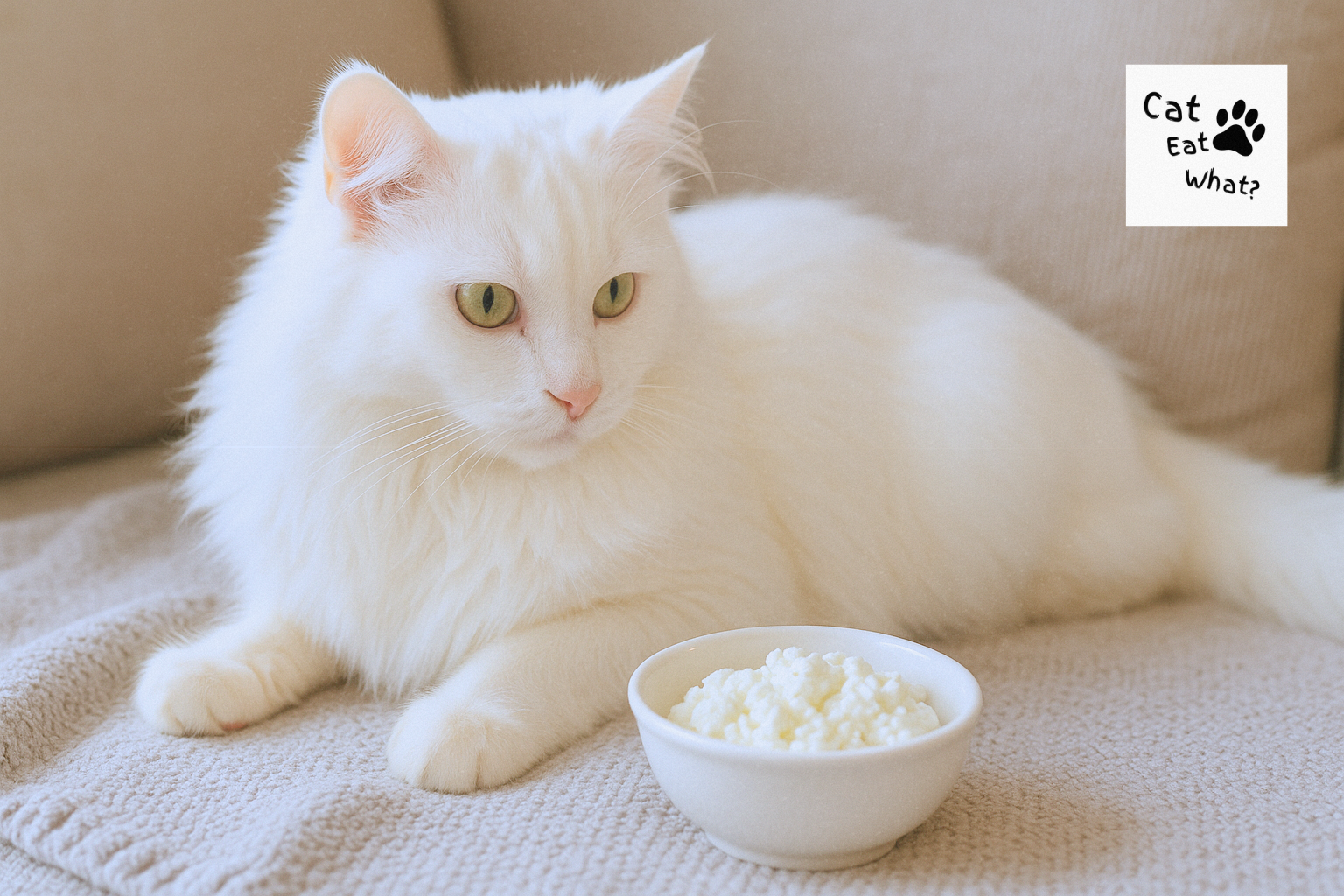
Cottage cheese is a popular human snack—mild, creamy, and rich in protein. Many cat owners find their pets curiously sniffing the tub or pawing at a spoonful. But you may be wondering: Can cats eat cottage cheese safely? As a veterinarian-led resource, we’ll look at whether cottage cheese is safe for cats, its possible benefits, the risks you should be aware of, and how to offer it (if at all).
What Is Cottage Cheese?
Cottage cheese is a fresh, soft cheese made by curdling milk and draining away most of the whey, leaving behind moist curds. Unlike hard cheeses, it’s not aged and usually retains a higher moisture content.
It comes in different fat levels (low-fat, reduced-fat, full-fat) and may contain added salt or flavorings. The mild taste and soft texture make it a popular choice for people looking for a high-protein dairy snack.
For cats, however, the high dairy content and added ingredients can be a problem.
Is Cottage Cheese Safe for Cats?
The short answer: It’s not toxic, but it’s not recommended.
While a tiny lick of plain cottage cheese is unlikely to harm a healthy adult cat, cottage cheese is not a necessary or ideal food for felines. Here’s why:
- Lactose content – Although cottage cheese contains less lactose than milk, it still has enough to cause digestive upset in many cats.
- High sodium – Some brands contain added salt, which can be harmful to cats, especially those with kidney or heart conditions.
- Fat levels – Full-fat varieties are high in calories and saturated fat, which can contribute to obesity and pancreatitis.
Any Benefits for Cats?
From a nutritional perspective, cottage cheese offers minimal benefits for cats compared to their normal diet:
- Protein – It contains protein, but cats already get complete, highly digestible protein from meat-based diets.
- Calcium – Dairy is a calcium source, but cats don’t need dairy to meet their calcium needs—they get it from a balanced cat diet.
- Palatability – Some cats love the taste and texture, which can be useful for hiding medication in rare cases.
While these may seem like positives, the drawbacks outweigh the benefits for most cats.
Risks Involved
Feeding cottage cheese to cats—especially in anything more than a tiny amount—comes with potential risks:
- Digestive upset – Diarrhea, gas, bloating, and vomiting are common in lactose-intolerant cats.
- Obesity – High-calorie treats can lead to unhealthy weight gain over time.
- Pancreatitis risk – Very fatty foods can, in some cases, trigger pancreatitis.
- High sodium levels – Can strain the kidneys and heart, particularly in senior cats.
- Nutritional imbalance – Filling up on treats can cause cats to eat less of their nutritionally complete food.
Best Way to Offer It (If You Must)
If you decide to let your cat try cottage cheese:
- Choose plain, unsalted cottage cheese with no added herbs, fruits, or flavors.
- Offer no more than half a teaspoon at a time.
- Treat it as an occasional snack—no more than once every couple of weeks.
- Avoid giving it to cats with kidney disease, heart disease, obesity, or digestive issues.
- Monitor your cat closely for vomiting, diarrhea, or unusual behavior afterward.
Can Kittens Eat Cottage Cheese?
No.
Kittens are more tolerant of lactose than adult cats but still do not need cottage cheese in their diet. The fat, salt, and dairy proteins can upset their digestion. Kittens require precise nutrition from a complete kitten formula or high-quality kitten food—not dairy products.
Safer Alternatives
If you want to give your cat something creamy and enjoyable, there are far better options than cottage cheese:
- Commercial lactose-free cat milk – Specially formulated for cats, easy to digest.
- Plain cooked chicken or turkey – High in protein, very safe.
- Cat treat purées (e.g., Churu) – Soft, creamy, and designed for feline digestion.
- Plain goat’s milk for cats – Naturally lower in lactose and easier to digest than cow’s milk.
Vet’s Final Verdict
Cottage cheese isn’t toxic, but it’s not recommended for regular feeding. While a tiny taste of plain, unsalted cottage cheese won’t harm most healthy adult cats, it offers no real health benefits and may cause digestive upset, weight gain, or other problems if given too often.
Stick to feline-appropriate treats for your cat’s long-term health—and save the cottage cheese for your own plate.