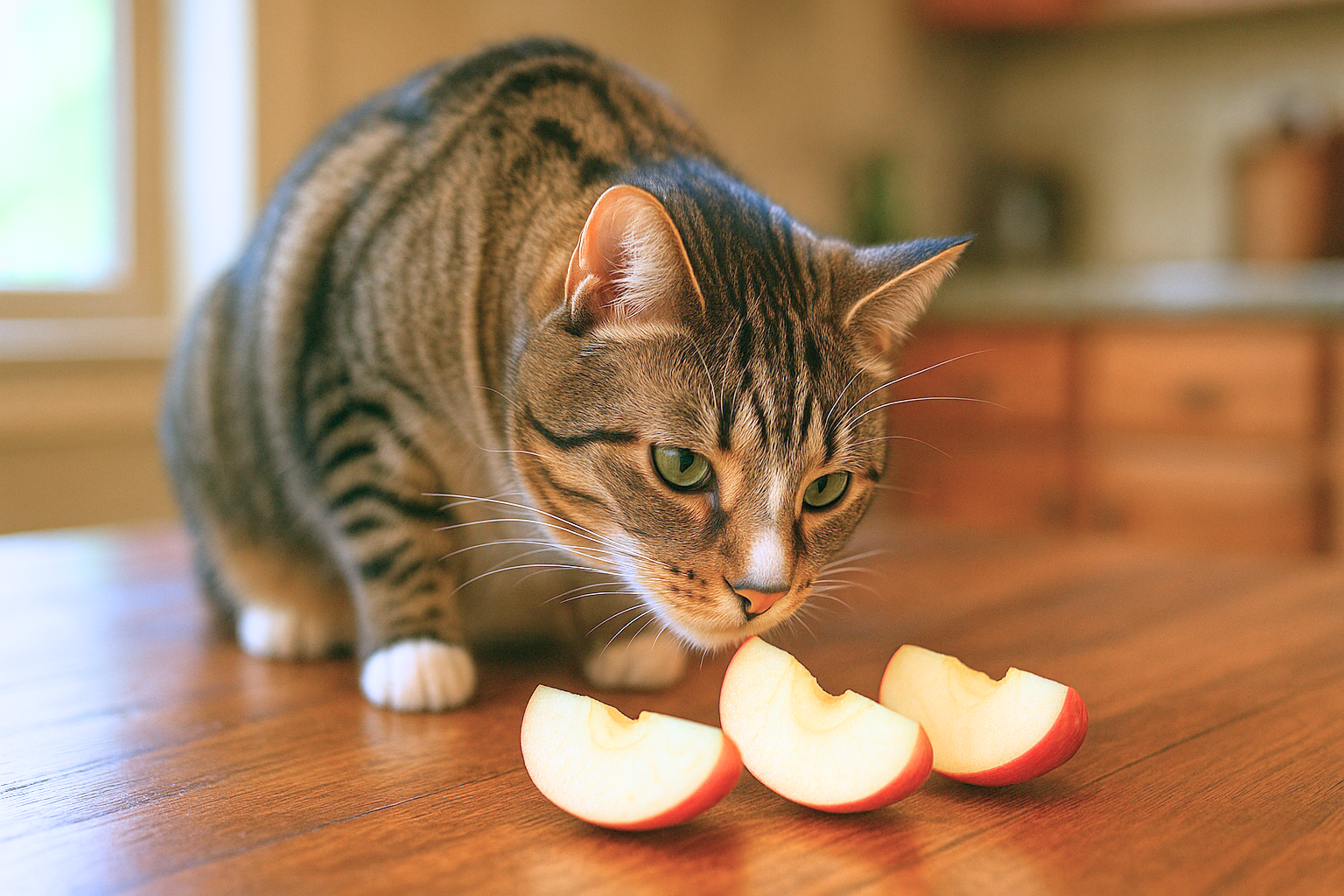
Can Cats Eat Apples? A Complete Vet-Reviewed Guide
If your cat has ever sniffed your apple slice with curiosity, you might wonder: Can cats eat apples safely?
The short answer is yes—but with caution. Apples are non-toxic to cats when prepared properly, according to the ASPCA’s list of safe foods. Still, as obligate carnivores, cats have no nutritional need for fruit, so apples should only be offered as an occasional treat.
Let’s explore what you need to know about serving apples to cats safely, what parts to avoid, and how they may (or may not) benefit your feline friend.
What Are Apples, Really?
Apples are one of the most widely consumed fruits in the world. They grow on deciduous trees, come in countless varieties, and are known for their crisp texture and sweet or tart flavor.
Nutritionally, apples are rich in:
- Vitamin C
- Vitamin A
- Fiber
- Natural sugars
- Antioxidants
While that makes them a healthy snack for humans, cats are very different. Their digestive systems are designed to extract nutrients from meat, not fruit.
Are Apples Safe for Cats?
Yes, apples are safe for cats when served correctly. The flesh of the apple is fine in small amounts. However, you must remove the seeds and core, as apple seeds contain amygdalin, which can release cyanide when digested—this is toxic to cats.
So, while a tiny slice of peeled apple is OK, never let your cat nibble a whole apple or chew near the core.
Do Cats Like Apples?
Cats vary widely. Some may be curious and take a nibble; others may walk away. Since cats lack sweet taste receptors, they aren’t attracted to the sugary taste—any interest is likely about texture or scent.
If your cat doesn’t care for apples, that’s perfectly fine. There’s no dietary benefit they’d be missing.
Can Apples Benefit Cats at All?
There’s limited benefit, but a few things to note:
- A tiny piece of apple can act as a low-calorie treat
- The fiber may help mild constipation (though canned pumpkin is more effective)
- Apples contain antioxidants which may support general wellness, though the impact on cats is minimal
These minor benefits are outweighed by the fact that your cat is designed to thrive on protein and fat—not fruit.
How to Serve Apples Safely
If you want to let your cat try an apple:
- Wash the apple thoroughly
- Peel it (skin contains pesticides and is hard to digest)
- Remove core and all seeds
- Cut a tiny piece—no larger than a fingernail
- Serve raw, plain, and unseasoned
Avoid:
- Apple pie
- Applesauce (contains sugar and spices)
- Caramel apples
- Dried apples (concentrated sugars)
Can Kittens Eat Apples?
No—kittens should not eat apples. Their digestive systems are delicate, and their nutritional needs are extremely specific. Stick to kitten-formulated food until at least 12 months of age.
Risks of Apples for Cats
While not toxic (if prepared right), apples can cause problems if:
- Overfed (can cause upset stomach or diarrhea)
- Fed with peel or seeds
- Given with sugary toppings
- Fed too frequently (even safe fruits should be limited)
As with any treat, apples should make up less than 5% of your cat’s weekly diet.
Related Reading
Curious about other fruits? You’ll love:
For official safety info, visit the ASPCA’s plant safety database.
Conclusion
So, can cats eat apples? Yes—but in tiny, occasional portions, and never with seeds or skin. Apples are non-toxic, but they aren’t necessary or particularly beneficial.
Use apples as a novelty treat—something to engage your cat’s curiosity, not something to add to their diet regularly. And as always, if you’re unsure, check with your vet first.