Can Cats Eat Beetroot? The Surprisingly Colorful Truth
Beetroot — vibrant, earthy, and packed with nutrients — is a popular root vegetable in many kitchens. But what happens when your curious cat starts sniffing around your salad or cooked veggies? Can cats eat beetroot? Is this deep-purple food a healthy treat or something better left off the menu? Let’s break it down with vet-backed clarity.
What Is Beetroot?
Beetroot, often just called “beets,” is the taproot portion of the beet plant (Beta vulgaris). It’s commonly used in salads, juices, soups, and even baked goods due to its sweet, earthy taste and vivid purple-red pigment, which comes from natural compounds called betalains.
It’s also known for its high nutritional value in humans — rich in folate, manganese, fiber, and antioxidants. But nutritional value for humans doesn’t always mean it’s safe for our feline companions.
Is Beetroot Safe for Cats?
In small, occasional amounts, cooked plain beetroot is not toxic to cats. According to current veterinary toxicology sources, beetroot does not appear on the ASPCA’s toxic food list for cats.
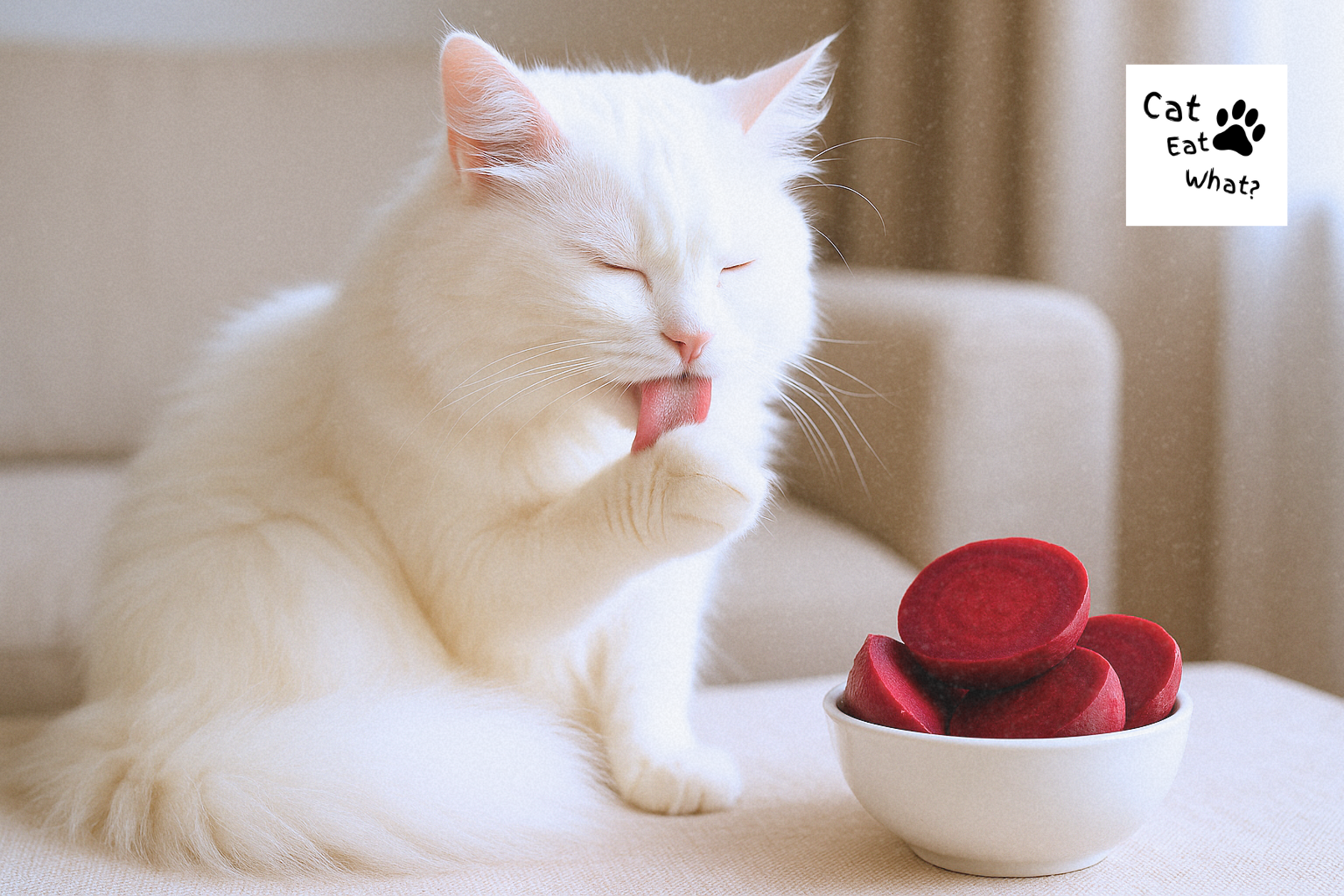
However, raw beetroot is harder to digest and may pose more of a risk for stomach upset. Additionally, the intense pigment can cause temporary discoloration of urine or stool, which may alarm pet owners but isn’t necessarily harmful.
Key point: Beetroot is not poisonous, but that doesn’t mean it’s ideal cat food.
Are There Any Benefits of Beetroot for Cats?
Technically, yes — but they are minimal. While beetroot contains:
- Folate
- Potassium
- Antioxidants
- Natural fiber
…cats are obligate carnivores. Their digestive systems are built to process meat, not plants. So while those nutrients sound great, your cat can’t absorb them efficiently from beets the way humans can.
Some commercial cat foods use beet pulp (a fiber-rich byproduct) to aid in digestion and stool quality, but this is a processed form and not the same as feeding raw or cooked beetroot at home.
What Are the Risks of Feeding Beetroot?
Even though beetroot isn’t toxic, it can still cause digestive upset in some cats, especially if:
- It’s served raw
- It’s heavily seasoned or pickled
- It’s given in large quantities
Possible side effects include:
- Vomiting
- Diarrhea
- Stomach discomfort
- Temporary red-colored urine or stool
There’s also the sugar content to consider. Beetroot contains natural sugars, which cats don’t need and may lead to weight gain over time if overfed.
Best Way to Offer Beetroot to Cats (If You Do)
If you’re determined to share a small taste, follow these safety tips:
- Cook it thoroughly: Steam or boil plain beetroot without any salt, butter, garlic, or seasoning.
- Let it cool: Never serve hot.
- Cut into small pieces: To prevent choking.
- Serve tiny portions: Think a few shreds or one small cube max.
Never feed pickled beetroot — it contains vinegar and salt, which are harmful to cats.
Can Kittens Eat Beetroot?
It’s best to avoid offering beetroot to kittens. Their digestive systems are more sensitive than adult cats, and they require high levels of protein and fat to grow. Plant-based foods like beetroot offer no nutritional value to a kitten and may cause unnecessary tummy troubles.
Healthier Alternatives to Beetroot for Cats
If you’re looking to treat your cat with a safe fruit or veggie option, try these vet-approved picks:
- Cooked pumpkin – great for digestion
- Steamed zucchini – soft, low in sugar
- Cucumber slices – hydrating and safe
- Cooked carrots – gentle on the stomach in small bites
Always introduce new foods slowly and monitor for reactions.
Vet’s Final Verdict: Can Cats Eat Beetroot?
Beetroot is not toxic, and a small, cooked piece won’t harm your adult cat. But it offers no real nutritional advantage, and there’s always a risk of stomach upset or sugar overload. For most cats, the better option is simply to skip it.
Curious cats may sniff your plate, but when it comes to treats, stick with species-appropriate options. As always, if you’re unsure, talk to your vet before introducing new foods.